african americans

Oreo Advice – Turn Slave Labor into a Sexy Pasttime

Picking cotton was a tedious and painful job endured by millions of slaves in the US for profit they never got to see.

What better then to say that you enjoy as an Oreo! Few things will throw people off your ethnic scent like appreciating a task that scarred the hands and lives of your ancestors!

Thanks, then to Cotton USA for making that conversation piece more possible.

(And thanks to friends at Sociological Images for the tip and link!)

A good romp through a prickly, spiky cotton field with basket in hand has the potential to remind an of color of a terrible institution and possibly illicit a sense of allegiance to one’s race.

But not for a well-trained Oreo. Instead, that same romp will bring feelings of relaxation and ease as you help make others more comfortable with a country’s sketchy past.

Bonus points if you include in your discussion that with the advent of technology like the cotton gin, picking and separating cotton wasn’t all that difficult in the end.

Who doesn't like to work outdoors?

Want more Oreo Advice? Check out: More Good Oreo Conversation Starters, Great Moments in Advertising, and When Being Black Can Actually Help You Out

Studios Continue to “Help” Us Out

So, this week, a man of color helmed the passing of one of the most influential pieces of legislation in our lifetimes.

But don’t worry, that doesn’t mean that your average of colors are able to do much on their own. And remembering that fact is crucial to sticking to the Oreo lifestyle.

The Oreo Experience is therefore very excited to see casting news for “The Help.” The Help is based on the book of the same name by author Kathryn Stockett. In this book, a white woman comes home from college to find that her beloved maid is gone. She decides to look into the matter and after losing her precious possession, she figures out that racism is a bummer and then gives some RBP (other maids) the ability to break their chains.

Even better is who’s attached!!!

  • Author Kathryn Stockett: White.
  • Writer/Director Tate Taylor: Probably has freckles.
  • Likely starring (and discussed long before the two major RBP actresses who, despite TOE’s suggestion, must be in the film) Emma Stone: Totally sunburns.
  • Producer Christopher Columbus: I know, it’s too good to be true.

Who better to tell the story of some black women suffering from the oppression of a firmly entrenched class and race system? Just like Spielberg’s MLK flick, a core production team of this shade removes any hint of uncomfy verisimillitude from the whole process. Because movies should be fun, not awkward!

Making a movie about the lives of oppressed black women? Meet your dream team!!!

Novelist Kathryn Stockett

Lead Actress Emma Stone

Writer/Director Tate Taylor - dreamy...and creamy!

Producer Chris Columbus

Can’t wait to see what they’ll tackle next! Harriet Tubman biopic, anyone??

See also: MLK has a dream….that white people will make his movie, other movies The Oreo Experience loves and how inspiring movie trailers can be.

Don’t Read This Book Late at Night

I was as freaked out by this as I was at Paranormal Activity and when my Arabian jumped a 5-foot square oxer for the first time.

Author Damili Ayo brings us her book, “Obamistan! Land Without Racism.”

A peek inside, shows us gems like this:

…if you are a drug dealer of color and are ready to move on to other work opportunities, you should check out the MBA program at your local university. Having already proven your entrepreneurial skills, you will be given a full scholarship. You will probably drop out before you complete your degree, but as in the tradition of Harvard Business School, that will be because you have been offered a fantastic position at a successful firm. This will leave lots of job openings in your former field for white drug dealers to get their start. However, if you are a white drug dealer, you will need to take more serious precautions against arrest. Before, you could just hide behind a copy of the New York Times and watch as the cops cuffed and booked the brown-skinned man across the street. But your skin no longer serves as your get-out-of-jail-free card. You won’t get less time or lighter sentences either. Basically, the free ride on your white horse is over.

At first blush, such a world may seem like a good thing. But for us Oreos, it most certainly is not.

Without double and difficult standards, how do we know what we’re working toward? If my natural nappy roots were suddenly the norm the nation over, how do I explain to my lungs, the years of having them slowly eroded from breathing sodium hydroxide fumes. What happens when my White People to the Rescue loses relevance because we no longer need them to save us? I have loathed so many things about me for so long…would I even be able to learn to love? The standards create the yardstick and scales I used to measure and record my BMI: Black Meting Index. With nothing to be better than, I would be nothing more than an RBP.

Thankfully, Ayo’s story is just that, a story.

Has anyone else read it? And did you have the same night terrors? Let us know what you thought.

Follow the Rules and Make it Easier for Journalists

I would have posted this picture even if it didn't go along with the story.

One of the most important rules of being an Oreo is not to congregate with other Oreos. Doing this is obviously dangerous for an Oreo because it may cause you to start relating to other of colors on about things related to being of color and then your years of repression are as ruined as a salmon frittata cooked at 375 instead of 350.

But it also puts journalists in a sticky situation.

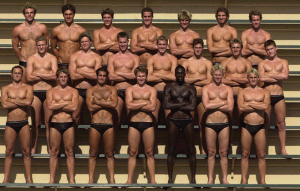
How are sports writers supposed to write about blackletes in typically anglo sports if they can’t call them “The Tiger Woods” of that sport?

Writer Richard Morgan writes about this phenomenon in his article: “The Black Athletes Who Don’t Play Basketball.”

In 2005, The New York Times noted that Kyle Harrison and John Walker were both considered simultaneous Tiger Woodses of lacrosse — and that wasn’t even counting the other two black lacrosse players, John Christmas and Harry Alford, who were layered onto the story as icing.

Adolfo Cambiaso is the “Tiger Woods of polo,” according to the Fort Lauderdale Sun-Sentinel and according to Vanity Fair in May of 2009. Unfortunately, Jabarr Rosser, then a 10th grader in West Philly, was already named as a potential Tiger Woods of polo in the Philadelphia City Paper, way back in 2001.

If only Kyle, John, John or Harry had paid attention to the rules, they wouldn’t have put the NYT and Vanity Fair in such an awkward position. And we’ve seen how much VF wants to get imagery right.

Morgan continues:

Phil Ivey is, by all accounts, the Tiger Woods of poker. Although, given that he earned $17 million in three days of playing–and another $7 million in online poker–he doesn’t need endorsement deals the way Woods does.

Kelly Slater, the part-Syrian Australian, is or is not the Tiger Woods of surfing, depending on who you ask.

Jeremy Sonnenfeld was, for a while, the Tiger Woods of bowling—due to his age, not his ethnicity. England’s Robert Fulford was the Tiger Woods of croquet, again due to his age—though he was in competition for this title with Jacques Fournier. Same with the white Englishman Phil Taylor, the Tiger Woods of darts (and, by The Independent‘s measure, “Britain’s greatest living sportsman”). Although that was 2001, well before The Independent got around to writing about Lewis Hamilton, the young black Briton who is the Tiger Woods of F1 racing.

But if you are going to start crowding a non power sport with more than one person of color in it, be sure to do it correctly. Morgan describes how sports writers prefer to write about these anomalies.

Sports journalism tends to be celebratory, regardless of who is the focus of the story. With black athletes in atypical sports, stories rely on showcasing the player’s rare talent and fierce determination that have blessed him or her with the power to overcome whatever obstacles have kept blacks from joining, say, fencing teams in the past. It’s a very Billy Elliot version of The Blind Side.

But, as with The Blind Side, the story often becomes about how it takes a village of white people to transform a troubled kid by means of civilizing leisure. There’s the white adoptive family, the white coaches, the white private-school teachers, the white personal tutor.

See! While a high profile career in sports requires mostly insanely intense focus, determination, strength and a high pain tolerance, there is also a secret ingredient…if you’re of color. I don’t think we need to watch the video again to remind us of what that secret ingredient is, but just in case you wanna, here it is.

Aaaand, in case you’re worried that all these Tiger Woods of whatevers will make it more difficult for you to stand out at your next lacrosse meet or equestrian trial, don’t worry, Chris Rock is here to remind us of things of colors shouldn’t do…so that we Oreos can proudly go forth, do them and confuse!

His upcoming movie, The First Star, tells the story of people being baffled by black skiiers. Much the way Essence was, Morgan says a few years back.

in 1989, Essence ran a story on the National Brotherhood of Skiers; they marveled at “the sight of all those sisters and brothers at the summit, out there on the mountain at the crack of dawn, even after partying all night.

Oh, right…Essence is a black magazine…don’t worry. I only learned that in research for this post.

Writing Advice

Inspired by Binyavanga Wainaina’s article “How to Write about Africa,” The Oreo Experience presents a handful of tips on how to write about not Africans, but African Americans. (Please, please do read Mr. Wainaina’s article. Excellent, sound advice there.) There are many similarities, but a few key differences.

Find a way to incorporate “soul,” “color,” “brother” or “dark” into your title or subhead. This will immediately clue your readers into the fact that this article is about someone of color. You need to let people know that awkward material is on the horizon. Bonus points if you can work some sort of ghetto/urban/ebonics into your title, too!  

Never write about middle to upper middle class African Americans. Your audience will recognize that this can’t possibly be the experience of RPB and it will ring false. 

Keep it down, low. Whether you’re writing about rising unemployment and continued high poverty, how the recession is hitting blacks harder than others, the burden felt by pioneers, higher levels of diabetes or HIV, or food deserts in of color communities, remember, no one should be smiling by the time they get to your end paragraph. Articles about doctors doing amazing things, academics rising to great heights
 and well-to-do families adopting kids  really need to focus off of of colors in order to ring true. 

And as important as it is to write this way, Oreos, it’s important to keep reading, too. If you’re not sure why you’re fighting the Oreo fight, click on any of those links in Tip #3 and you’ll be back on the self-loathing track in no time!

Be sure to check back in next week when we discuss how to cast an actor of color in your film or television show!

Diary of a Mad White Black Woman – Image

Dear Diary,

The kind of invitation I’d been waiting for finally came. Embossed envelope withe the kind of wax seal I haven’t seen since my last Renaissance Festival. I was expecting to be asked to any number of red carpet events where I could rub sunburned elbows with the kind of people it does me good to be seen with.

Then I opened the envelope.

The NAACP Image Awards?? 

Such a tease you are, life, such a tease. 

They are honoring The Blind Side, though. So, maybe they’re more Oreo-tastic than I thought.

“Racism Nearly Over,” Fox News says!

Are they right?

In an article published on foxnews.com, the confusingly named Juan Williams chided major newspapers for not publishing startling findings from the Pew Research Center for People and the Press that said that whites and blacks are existing in a blissful state of grey and that both camps feel that issues surrounding race are about to vanish.

Let’s take a look at some of his finer points:

JW writes:

“The poll by the respected Pew Research Center for the People and the Press found that 70 percent of white Americans and 60 percent of black Americans “believe values held by blacks and white have become more similar in the past decade.”

I agree. Sure, blacks and white do have the same values. Like I’m sure both sides value say, not murder and not being poor and finding love when they least expect it. Most people have similar values to other people. This doesn’t mean, however that they have similar ways of or equal access to pursuing those values.

For example, I value feeding my soul as well as my belly by having a relaxing, long lunch. So does my boss. We both can’t be out of the office for an extended period of time. Guess who wins.

JW continues:

“The poll also found that 65 percent of whites and 56 percent of blacks believe the gap between standards of living for the two races has narrowed over the last ten years. Even as incomes between the races have slightly widened during those ten years there is the feeling among both races that the level of comfort – living standard – is increasingly similar.”

Here, Williams admits that the gap has gotten bigger, but is happy that we’ve all been duped to believe otherwise.

And take a look at this gem…carefully:

“And in what I think is the most amazing finding of the new poll 52 percent of blacks said that black people who are not getting ahead today are “responsible for their own situation.” Only one-third of black Americans said racism is keeping down the black poor.

Fifteen years polls found the exact opposite with most black people pointing to racism as the major impediment to black people rising up the ladder of social and economic opportunity in the U.S.”

JW asserts that it’s a good thing that fewer blacks feel that racism is making life harder for them. That people are “responsible for their own situation.” This, just after he wrote that the economic gap between blacks and whites is widening. 

The inference that has to be drawn from these two statements is that the gap is widening because of something that blacks are doing wrong. Because if racism or historically disenfranchising systems aren’t the problem, then it has to be blacks themselves.

See why I’m trying to hard to escape my ethnicity!

But wait, there’s more!

JW says:

“But there is something else going on here. Since the intense years of civil rights activism in the 1950s and 1960s the rates of high school graduation, income and home ownership have all been climbing for black Americans. But despite those decades of change polls did not find any sudden rise in optimism among black people to match what this latest Pew poll has uncovered.

I think I know why.

Black Americans and especially black civil rights leaders did not want to acknowledge the progress being made on the race relations front. Blacks feared that white America — in the form of government, foundations, churches and educational institutions — might point to any admission of racial progress as evidence that there was no more work to be done to heal the damage done to contemporary American life by racism.”

I heart that he makes this grand and sweeping assertion without any quote or research to back up such a theory.

So is racism about to meet an untimely end? Based on recent films, Golden Globe winners and meetings I’ve had, likely not. But that issue is eclipsed by the best thing about this article and this writer…he’s of color. Were this article written by a non color Foxer, I’d be nonplussed, but it looks like JW is one of us. So I welcome his castigation of the working poor and un-backed up theories with open arms! Welcome aboard Juan.

But we are going to have to change that first name. We can talk about it over ‘tinis. See you at the club, Trevor!

We got another one!

Recession Breeds More Oreos!


Choose Carefully! (Oh! And I have a great Jane Austen primer if you need suggestions!)


This weekend, NPR revisited a spate of stories discussing how black job applicants with obvious ethnicity in their resumes and on their applicants are whitening those elements and seeing success from their efforts. Qualified, but un- or underemployed of colors are changing their names, removing HBCUs from their education profile, erasing ethnic organizations from their professional work history list and opting for anglo references instead of color colleagues.

Everyone’s having a hard time finding work in these times and ethnic applicants, more than doubly so

The choice to blanche the background is based on evidence that employers shy away from resumes that sound too ethnic for their offices. This practice, though helpful, is not without effect.

“…the strategy of hiding race — in particular changing names — can be soul-piercing. It prompted one African-American reader of the article to write that he was reminded of the searing scene in the groundbreaking TV miniseries “Roots” when the runaway slave Kunta Kinte is whipped until he declares that his name is Toby, the name given to him by his master.

Black job seekers said the purpose of hiding racial markers extended beyond simply getting in the door for an interview. It was also part of making sure they appeared palatable to hiring managers once race was seen. Activism in black organizations, even majoring in African-American studies can be signals to employers. Removing such details is all part of what Ms. Orr described as “calming down on the blackness.”

Newbies, I understand that it hurts. But doing the right thing often does.

Welcome aboard!

Diary of a Mad White Black Woman – Cops Like Donuts, Not Oreos

Dear Diary,

I thought I was making more progress. But a slap on the wrist in front of the majority showed me how much work I still need to do and how I can never let my guard down for a second.

I had stopped off in West Hollywood to pick up some work from a client. I only left my car on the curb for a second and when I came back, a man with a badge and fancy flashing lights on his car was about to write me a ticket.

Thinking this could surely be cleared up sans city fine, I dusted off my pencil skirt, clicked my boot heels together and approached the nice man.

But as I pleaded my case, there was no sympathy in his eyes, no understanding, no pause to his pen and he kept writing. Then suddenly, a flash of recognition. He looked past me, nodded and put the ticket away.

What was behind me? My white client.

“Can we let this go,” Client said to the officer. “She didn’t know.”knight_m

Though I was relieved for my alabaster shield, my blanched bastion, my white knight, I was embarrassed and disappointed that I still needed one and that I’m still making newbie mistakes like this.

The ticket was for not angling my wheels at the curb. That’s what I didn’t know to do. Inexcusable.

I should have been ready for that. Parking on steep windy hills is part of privileged culture. I must remember these details if I am going to pass. It’s right up there with sending hand-written thank you cards and smiling through gritted teeth.

So it’s back to the books and away from the hills until I can conduct myself accordingly.